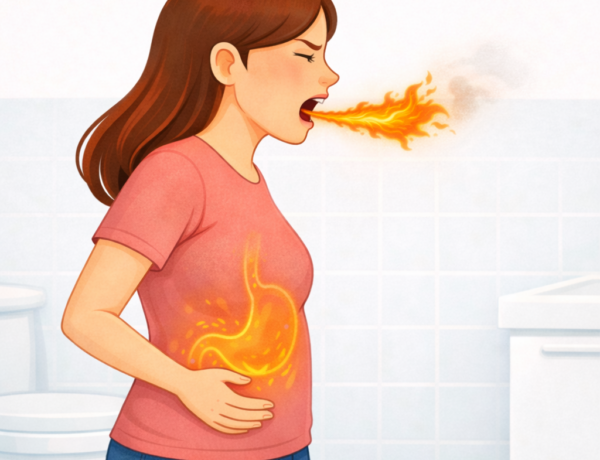


Food intolerances and digestive problems are among the most common concerns I see in my practice. There is one sentence I hear increasingly often: “I don’t know what to eat anymore.”
It often starts with one food.
You notice that bread makes you feel bloated, so you stop eating gluten. Then dairy seems to cause problems, so you eliminate that too. Perhaps beans become difficult to digest. Then certain vegetables. Fruit. Eggs.
Little by little, the list of foods you can eat becomes shorter and shorter.
And yet, despite all these dietary restrictions, your digestive symptoms may still be there.
Bloating, gas, abdominal discomfort, constipation, diarrhea, reflux or simply the feeling that your digestive system has become increasingly sensitive.
At that point, I believe we need to ask a different question.
Instead of continually asking:
“Which food should I eliminate next?”
perhaps we should be asking:
“Why has my digestive system become so reactive in the first place?”
Food intolerances and digestive problems: is food really the problem?
When one particular food consistently causes symptoms, it obviously makes sense to question whether you tolerate it well and to explore the question of food sensitivities.
But when ten, fifteen or twenty different foods become problematic, it may be useful to stop looking at each food in isolation.
Instead, we need to ask:
Why is my digestive system reacting today to foods I used to be able to eat without difficulty?
That question opens up very different possibilities.
Poor digestion
Digestion is much more than simply moving food from the stomach into the intestines.
Food has to be broken down properly at several stages of the digestive process.
Stomach acid, digestive enzymes, bile and intestinal function all play a role.
If these mechanisms are not functioning optimally, food may arrive in the intestine insufficiently digested. This can contribute to fermentation, gas, bloating and discomfort.
In that situation, eliminating more and more foods may reduce symptoms temporarily — but it doesn’t necessarily address why those foods have become difficult to digest.
The gut microbiome and digestive problems
The trillions of microorganisms living in our digestive tract play an important role in digestion and in our relationship with food.
When the intestinal ecosystem becomes disrupted, the way certain foods are fermented and metabolized can change.
This may contribute to symptoms such as bloating, gas and changes in bowel habits in some people.
The important question therefore becomes not simply:
“Which foods are feeding my symptoms?”
but also:
“What has changed in my digestive environment?”
The intestinal barrier and food intolerances
The lining of the intestine is not simply a passive wall.
It is a highly sophisticated barrier that allows nutrients to pass through while interacting continuously with the immune system and the microorganisms living in the gut.
When this environment is disturbed, food tolerance may also change.
This is another reason why focusing exclusively on eliminating foods can sometimes miss a larger part of the picture.
The nervous system matters too
Digestion does not function independently of the brain and nervous system.
The digestive tract and brain communicate constantly through what we call the gut-brain axis.
Stress, chronic tension, poor sleep and prolonged periods of emotional or physiological stress can influence motility, digestive secretions and intestinal sensitivity.
This does not mean that digestive symptoms are “all in your head.”
It means that digestion is regulated by multiple systems in the body — and the nervous system is one of them.
Why restrictive diets can become a trap
Elimination diets can be extremely useful when they are used for a specific reason and for an appropriate period of time.
Sometimes removing a problematic food is exactly what the digestive system needs.
The difficulty begins when the strategy becomes:
symptom → eliminate a food → new symptom → eliminate another food → eliminate another food…
Eventually, some people are eating only a handful of foods.
This can make eating socially difficult, create anxiety around meals and make it increasingly challenging to maintain a varied diet.
Most importantly, the original question may remain unanswered:
Why did the digestive system become so intolerant in the first place?
Looking for the underlying causes
When I work with someone whose food tolerance has become increasingly limited, I don’t look only at the list of foods causing symptoms.
I want to understand the whole picture.
How is digestion functioning?
What happens after meals?
How is bowel function?
Have there been gastrointestinal infections, antibiotic treatments or other significant changes?
What is happening with stress, sleep and the nervous system?
How did the problem begin?
The goal is not necessarily to identify one single cause.
Digestive problems are often multifactorial.
The objective is to understand why this particular digestive system, in this particular person, has become so reactive.
Do you feel as though you no longer know what to eat?
If your diet is becoming increasingly restricted while your digestive symptoms continue despite everything you have tried, it may be time to look beyond the next food to eliminate.
The goal is to understand the different factors that may be contributing to your symptoms and develop an approach adapted to you.
Béatrice Levinson
Naturopath – 38 years of experience
Specializing in digestive health and the gut-brain connection
GAPS Practitioner, France