
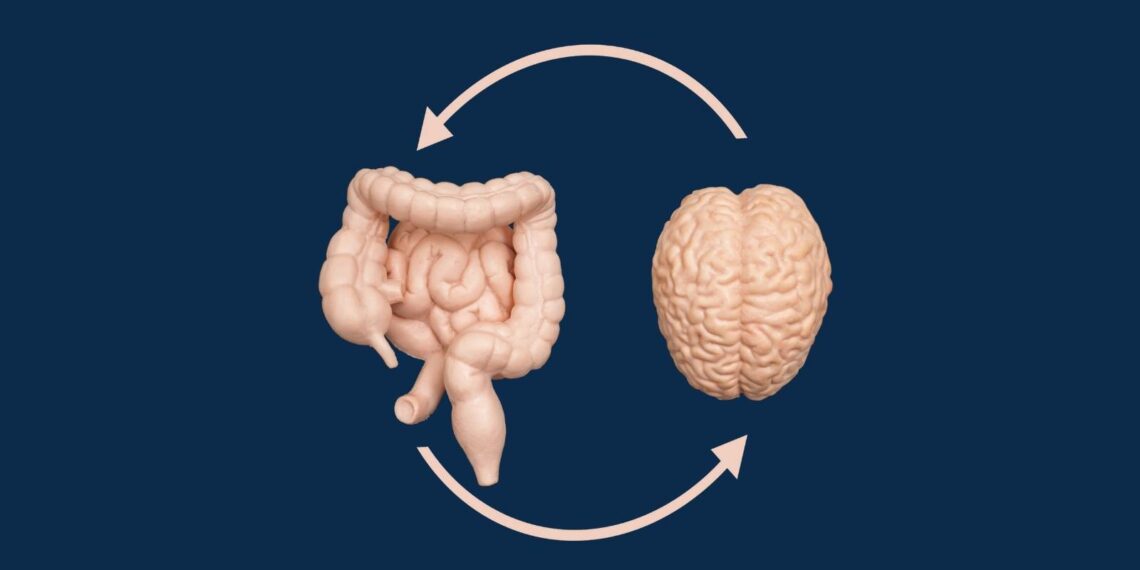

The gut-brain axis plays an important role in the constant communication between your digestive system and your brain. We often think of stress as something that starts in the mind and then affects digestion. Most of us have experienced this connection: a “knot” in the stomach before an important event, digestive discomfort during a stressful period, or changes in bowel movements when we feel anxious.
But what we sometimes forget is that this communication works both ways.
Your gut is also constantly sending information to your brain. This two-way relationship may help explain why digestive problems can sometimes occur alongside fatigue, poor sleep, irritability, or anxiety.
What Is the Gut-Brain Axis?
The gut-brain axis refers to the different communication pathways connecting your digestive system and your brain.
Your gut even has its own extensive network of nerve cells, known as the enteric nervous system, which is sometimes referred to as the “second brain.”
But communication between the gut and the brain does not rely on one pathway alone. It involves the nervous system, immune system, hormones, and the gut microbiome.
Most importantly, this communication is bidirectional.
The brain influences the gut, but the gut can also influence the brain and nervous system.
How Does the Gut Communicate With the Brain?
One of the major communication pathways is the vagus nerve, which carries information between the digestive organs and the brain.
The gut microbiome also participates in this communication. The trillions of microorganisms living in the digestive tract produce or influence a variety of substances that can interact with our metabolism, immune system, and nervous system.
This is one reason I consider the microbiome an important part of the picture — but never the only one.
Digestion, the intestinal lining, nutrition, stress, sleep, and hormonal balance may all play a role.
What Symptoms May Occur Alongside Digestive Problems?
When someone has chronic digestive problems, their symptoms are not always limited to the digestive tract.
In my practice, I frequently see people experiencing several problems at the same time:
- bloating, gas, or digestive discomfort;
- constipation or irregular bowel movements;
- persistent fatigue;
- poor or unrefreshing sleep;
- irritability;
- feelings of stress or anxiety.
This does not mean that a gut problem is necessarily the cause of all these symptoms. Anxiety, fatigue, and sleep problems can have many different causes.
However, when they occur together with digestive symptoms, it can be useful to consider the possible connections between these different systems.
Stress and Digestion: A Cycle That Can Reinforce Itself
Stress can have very real effects on digestion.
During periods of prolonged stress, digestive function can change. Intestinal motility, digestive secretions, visceral sensitivity, and even the composition of the microbiome may be affected.
But digestive discomfort itself can also become a source of stress.
Someone who experiences daily bloating, pain, or unpredictable bowel movements may begin to worry about meals, social situations, or traveling.
A cycle can gradually develop:
stress → disrupted digestion → digestive symptoms → more stress.
The goal, therefore, is not always to identify one single cause, but to understand what may be keeping this cycle going.
Why I Don’t Look at These Symptoms Separately
After 38 years in practice, this has become one of the most important aspects of my approach.
When someone comes to see me for bloating, I don’t look only at the bloating.
I also want to understand their digestion, bowel movements, sleep, energy levels, response to stress, and any other signs that may help us see the bigger picture.
Similarly, when someone is experiencing fatigue or anxiety along with digestive problems, I think it is important not to automatically view these as three completely separate issues.
This is at the heart of the gut-brain connection: looking for interactions rather than systematically isolating each symptom.
How Can We Support the Gut-Brain Axis?
There is no single diet, probiotic, or supplement that is right for everyone.
This is why I prefer to start with the individual: their symptoms, diet, history, digestion, bowel movements, sleep, stress levels and, when appropriate, laboratory results.
From there, we can gradually identify factors that may be contributing to the imbalance.
For one person, digestion may be the first area to address. For someone else, sleep or stress may need to be considered at the same time.
An individualized approach can help us look beyond the symptoms and investigate what may be contributing to them.
Could Your Symptoms Be Connected?
If you are experiencing digestive problems together with fatigue, poor sleep, stress, or anxiety, it may be helpful to look at the bigger picture rather than considering each symptom separately.
This is what I do during a consultation: we review your history, connect the different pieces, and identify the areas that deserve further attention.