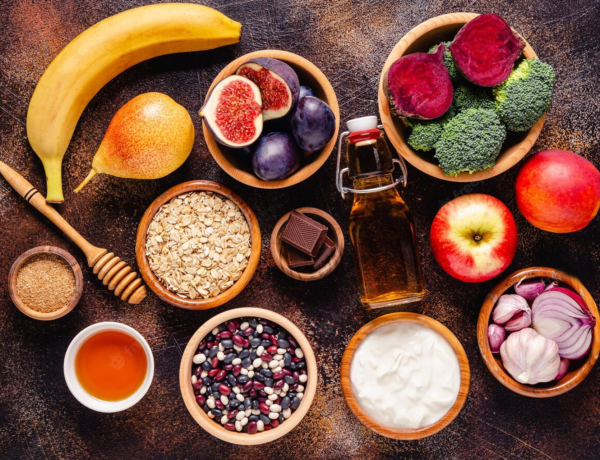
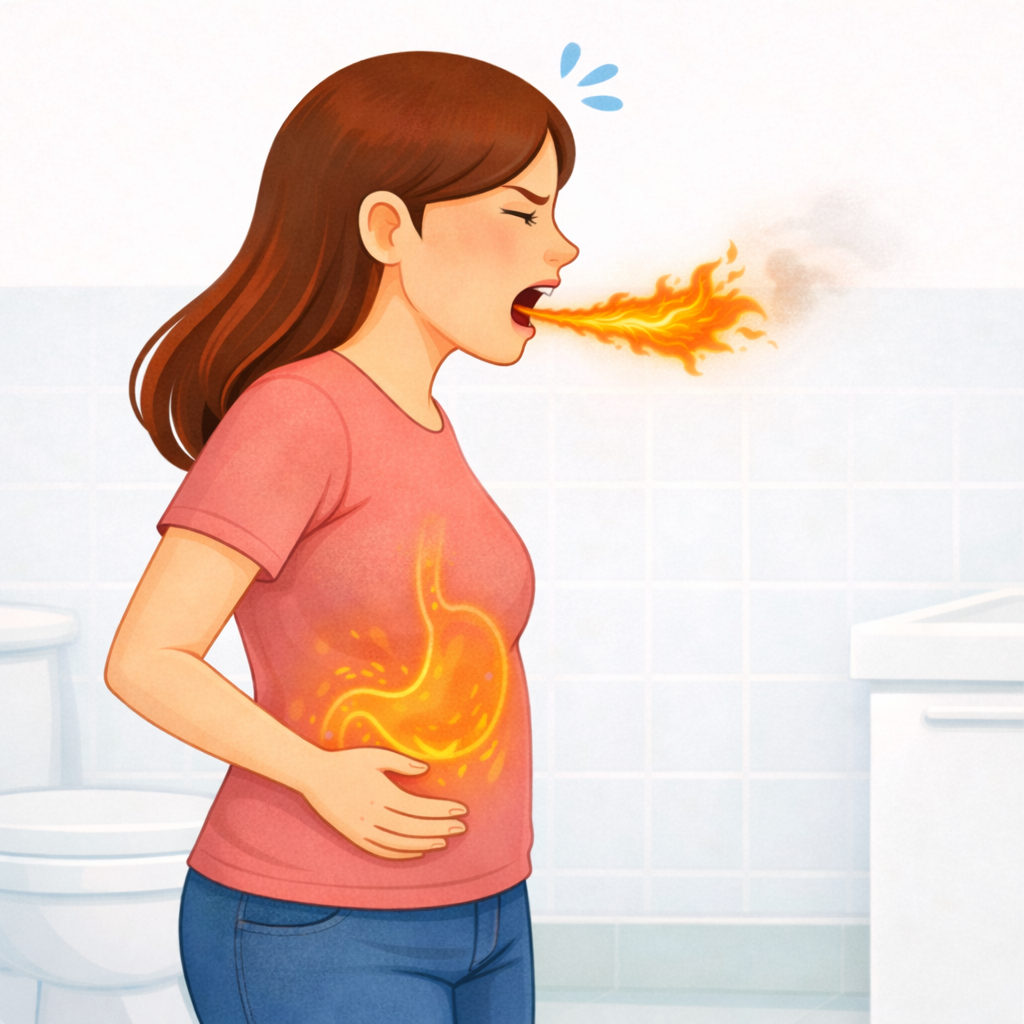

You eat healthy foods. You avoid processed foods, excess sugar, and perhaps even alcohol. You try not to eat too late at night, and yet, the burning sensation comes back.
Acid reflux can be frustrating, especially when you feel that you are already doing everything “right.” But understanding acid reflux causes requires looking beyond the simple idea that you have “too much stomach acid.”
In fact, reflux can be influenced by several different aspects of digestion and overall health.
Acid Reflux Is Not Always About Too Much Acid
When we think about acid reflux, we naturally think about stomach acid. The usual approach is therefore to reduce that acid, but stomach acid has important functions. It helps break down proteins, supports the absorption of certain nutrients, and participates in the body’s natural defense against microorganisms entering through food.
The real question is not simply:
“How much acid do I have?”
but rather:
“Why is the content of my stomach moving upward into my esophagus?”
That distinction matters.
What Are Some Possible Acid Reflux Causes?
There isn’t one single explanation for everyone. Several factors may contribute to reflux, sometimes simultaneously.
1. The Lower Esophageal Sphincter
Between the esophagus and the stomach is a muscular valve called the lower esophageal sphincter.
Normally, it opens to allow food into the stomach and then closes again. If this mechanism is not functioning optimally, stomach contents can move upward and cause the familiar burning sensation.
2. Digestion May Be Too Slow
If food remains in the stomach longer than it should, pressure inside the stomach can increase.
Large meals, eating too quickly, poor digestion, and certain foods may contribute to this sensation of fullness and pressure.
For some people, improving the digestive process itself can therefore be an important part of understanding their reflux.
3. The Gut Microbiome May Play a Role
Digestion does not stop in the stomach.
Changes in the intestinal microbiome, fermentation, bloating, and excessive gas production can affect pressure throughout the digestive system.
This is one reason I often look at the digestive tract as a whole rather than treating reflux as an isolated symptom.
4. Stress and the Nervous System
Have you noticed that your reflux becomes worse during stressful periods?
Digestion is closely connected to the autonomic nervous system. When we eat while rushed, anxious, distracted, or under chronic stress, our digestive function can change.
Taking time to sit down, breathe, chew properly, and eat in a calmer state may sound simple, but these habits can make a meaningful difference for some people.
Healthy Foods Can Still Trigger Reflux
Eating “healthy” does not necessarily mean that every food is appropriate for every digestive system.
Coffee, chocolate, tomatoes, citrus fruits, spicy foods, fatty meals, alcohol, and even certain otherwise nutritious foods can aggravate symptoms in susceptible people.
But simply eliminating more and more foods is not always the answer.
Instead, I prefer to ask:
Why is this person’s digestive system reacting this way?
That question often tells us much more than simply creating another list of forbidden foods.
Look for the Cause, Not Only the Symptom
If reflux happens occasionally after an unusually large meal, that is one thing.
But when it becomes recurrent, it is worth trying to understand what may be contributing to it.
The possible acid reflux causes are not identical from one person to another. Eating habits, stomach function, intestinal health, stress, medications, and other health factors may all need to be considered.
And persistent or worsening reflux — particularly difficulty swallowing, unexplained weight loss, bleeding, anemia, recurrent vomiting or chest pain — should be medically evaluated.
In health, understanding the cause is always more useful than simply masking the symptom.
Would You Like to Understand What May Be Contributing to Your Reflux?
Every person is different. During a consultation, I look at your symptoms, diet, digestive health, lifestyle, and overall health history to help identify the factors that may be contributing to your symptoms.
👉 Schedule a consultation with me
Béatrice Levinson
Naturopath – Gut-Brain Health Specialist
38 years of experience