

Unrefreshing sleep can leave you feeling exhausted, even after seven or eight hours of sleep. You wake up feeling as though your body hasn’t recovered.
Unrefreshing sleep is a common complaint. It may be accompanied by difficulty concentrating, brain fog, irritability, or a persistent lack of energy throughout the day.
We often measure sleep quality simply by counting the number of hours we spend asleep.
However, eight hours of sleep does not necessarily guarantee optimal recovery.
To understand why, we need to look at how sleep is organized and the physiological processes taking place throughout the night.
Unrefreshing Sleep: Understanding the Different Sleep Stages
Sleep is organized into successive cycles containing several stages, each serving complementary functions.
A sleep cycle generally lasts between 70 and 120 minutes, although its duration varies throughout the night.
Light Sleep
Light sleep accounts for a substantial portion of our total sleep time.
It includes stages N1 and N2 of non-REM sleep.
During these stages, brain activity changes, heart rate slows, and the body becomes progressively less responsive to external stimuli.
Stage N2 also contributes to memory consolidation and learning.
Deep Sleep: An Essential Stage for Recovery
Deep sleep, also called slow-wave sleep or stage N3, is characterized by brain activity dominated by slow waves.
It is particularly abundant during the first part of the night.
This stage is associated with several important processes:
- Physical recovery.
- Growth hormone secretion.
- Certain aspects of immune regulation.
- Consolidation of specific types of memory.
- Metabolic regulation.
Growth hormone secretion is especially prominent during the first episodes of deep sleep.
This hormone plays an important role in growth, tissue maintenance, and repair.
Deep sleep therefore contributes to physical restoration, although it is not the only stage necessary for restorative sleep.
REM Sleep: Memory and Emotional Regulation
REM sleep is characterized by intense brain activity and a marked reduction in muscle tone.
It becomes more prominent during the second half of the night.
REM sleep contributes to:
- Memory consolidation.
- Learning.
- Emotional processing.
- Regulation of certain brain functions.
Truly restorative sleep depends on an appropriate organization of these different stages.
Unrefreshing Sleep: The Role of Sleep Fragmentation
Brief awakenings during the night are perfectly normal.
Most are so short that we don’t even remember them.
However, when these awakenings become too frequent, they may interfere with sleep continuity.
Even when total sleep duration appears sufficient, recovery may be less satisfactory.
What Causes These Brief Awakenings?
Several factors can contribute to fragmented sleep:
- Sleep-related breathing disorders.
- Stress and nervous system hyperarousal.
- Chronic pain.
- Certain medications.
- Alcohol.
- Digestive disturbances.
- Periodic limb movements during sleep.
Importantly, we are not always aware of these interruptions.
Someone may believe they slept continuously for eight hours when their sleep was actually interrupted numerous times.
If you regularly wake up during the night, you may also find my previous article on waking up at 3 AM and the possible causes of nighttime awakenings helpful.
Sleep Apnea: An Important Cause of Unrefreshing Sleep
Obstructive sleep apnea is characterized by repeated episodes of partial or complete upper airway obstruction during sleep.
These episodes may reduce oxygen levels and trigger brief arousals that help restore normal breathing.
When they occur repeatedly, they fragment sleep.
Possible symptoms include:
- Loud snoring.
- Breathing pauses noticed by a partner.
- Waking up gasping for air.
- Morning headaches.
- Excessive daytime sleepiness.
- Persistent fatigue despite apparently adequate sleep duration.
Sleep apnea can also occur without obvious snoring.
When sleep apnea is suspected, medical evaluation and appropriate sleep testing are essential.
Stress and the Nervous System: Why Doesn’t Your Brain Recover?
Sleep depends on complex interactions between the mechanisms that promote sleep and those that maintain wakefulness.
The autonomic nervous system participates in this regulation.
Physiological Hyperarousal
In some individuals, chronic stress can contribute to a state of hyperarousal.
This involves excessive activation of alertness mechanisms, sometimes even during sleep.
It may be associated with:
- Difficulty relaxing.
- Light or fragmented sleep.
- Frequent awakenings.
- Feeling exhausted upon waking.
Cortisol, a hormone involved in stress responses, also participates in the regulation of the sleep-wake cycle.
However, it would be inaccurate to assume that all unrefreshing sleep results from excessive cortisol.
The underlying mechanisms are often multifactorial.
If you also struggle to fall asleep, read my previous article on difficulty falling asleep and why your brain won’t switch off at night.
Digestion and Sleep: The Gut–Brain Connection
In my naturopathic practice, I pay particular attention to the relationship between the digestive and nervous systems.
These systems communicate continuously through neural, hormonal, immune, and metabolic pathways.
This bidirectional communication is commonly referred to as the gut–brain axis.
Acid Reflux
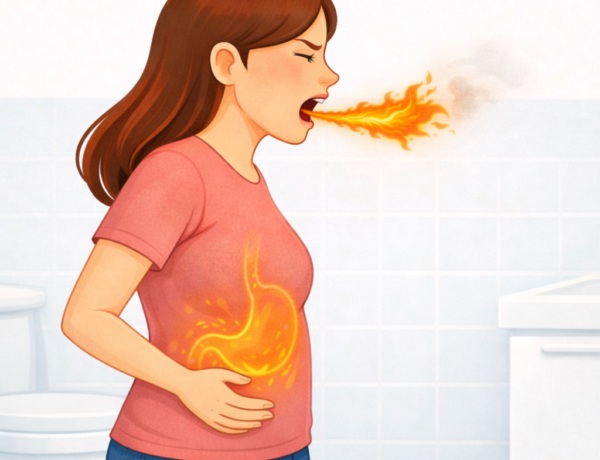
Nighttime acid reflux can interfere with sleep, particularly when stomach contents irritate the esophagus or cause coughing and discomfort.
These symptoms may trigger repeated awakenings.
Bloating and Abdominal Discomfort
Abdominal pain, intestinal spasms, or significant bloating can also make sleep less stable.
Conversely, insufficient sleep may increase pain sensitivity and influence how digestive symptoms are perceived.
The Gut Microbiome and Sleep
The gut microbiome contributes to numerous physiological functions, including metabolic and immune regulation.
It also participates in communication between the digestive system and the brain.
Scientific research suggests interactions between the microbiome, circadian rhythms, inflammation, and sleep quality.
Unrefreshing Sleep: Could Your Fatigue Have Another Cause?
It is important to distinguish between two different symptoms.
Sleepiness refers to an excessive tendency to fall asleep during the day.
Fatigue refers more broadly to a lack of energy or a feeling of exhaustion, without necessarily experiencing an urge to sleep.
These symptoms may occur together, but their underlying causes are not always the same.
Persistent fatigue despite apparently adequate sleep may also be associated with:
- Anemia or iron deficiency.
- Hypothyroidism.
- Certain infections or inflammatory conditions.
- Metabolic disorders.
- Mood disorders.
- Certain medications.
- Chronic fatigue syndromes.
It is therefore important not to assume that morning fatigue is always caused by poor sleep quality.
Unrefreshing Sleep: How to Improve Your Recovery
1. Maintain Consistent Sleep Schedules
Relatively consistent wake-up times help stabilize the body’s internal clock.
2. Get Natural Light in the Morning
Morning light helps synchronize circadian rhythms.
It provides an important signal that helps the body distinguish between periods of activity and rest.
3. Evaluate Your Caffeine Intake
Caffeine can interfere with sleep even when it doesn’t cause difficulty falling asleep.
In some individuals, it may affect sleep depth and continuity.
4. Limit Alcohol
Alcohol may initially make it easier to fall asleep, but it often fragments sleep during the second half of the night.
5. Consider Your Digestive Health
If you experience nighttime acid reflux, avoiding large meals shortly before bedtime may help.
Allowing two to three hours between dinner and lying down is generally recommended.
6. Investigate Persistent Fatigue
When morning fatigue becomes chronic, it is important to investigate possible medical causes.
For chronic insomnia, cognitive behavioral therapy for insomnia (CBT-I) is recommended as the first-line treatment.
Conclusion: Sleep Quality Matters as Much as Sleep Duration
Sleeping eight hours does not necessarily mean getting restorative sleep.
The quality of our recovery depends on numerous factors, including sleep architecture, sleep continuity, physiological regulation, and overall health.
Sleep-related breathing disorders, stress, certain medications, and digestive disturbances may all interfere with recovery.
However, persistent fatigue may also have causes unrelated to sleep itself.
Are you consistently waking up exhausted despite getting what seems like enough sleep?
I offer personalized naturopathic consultations, both in person and online, to help explore factors that may be contributing to your fatigue, with particular attention to the interactions between the digestive system, nervous system, and lifestyle.
This approach complements appropriate medical evaluation when needed.
Béatrice Levinson
Naturopath – 38 Years of Experience
Specializing in the Gut–Brain Connection